
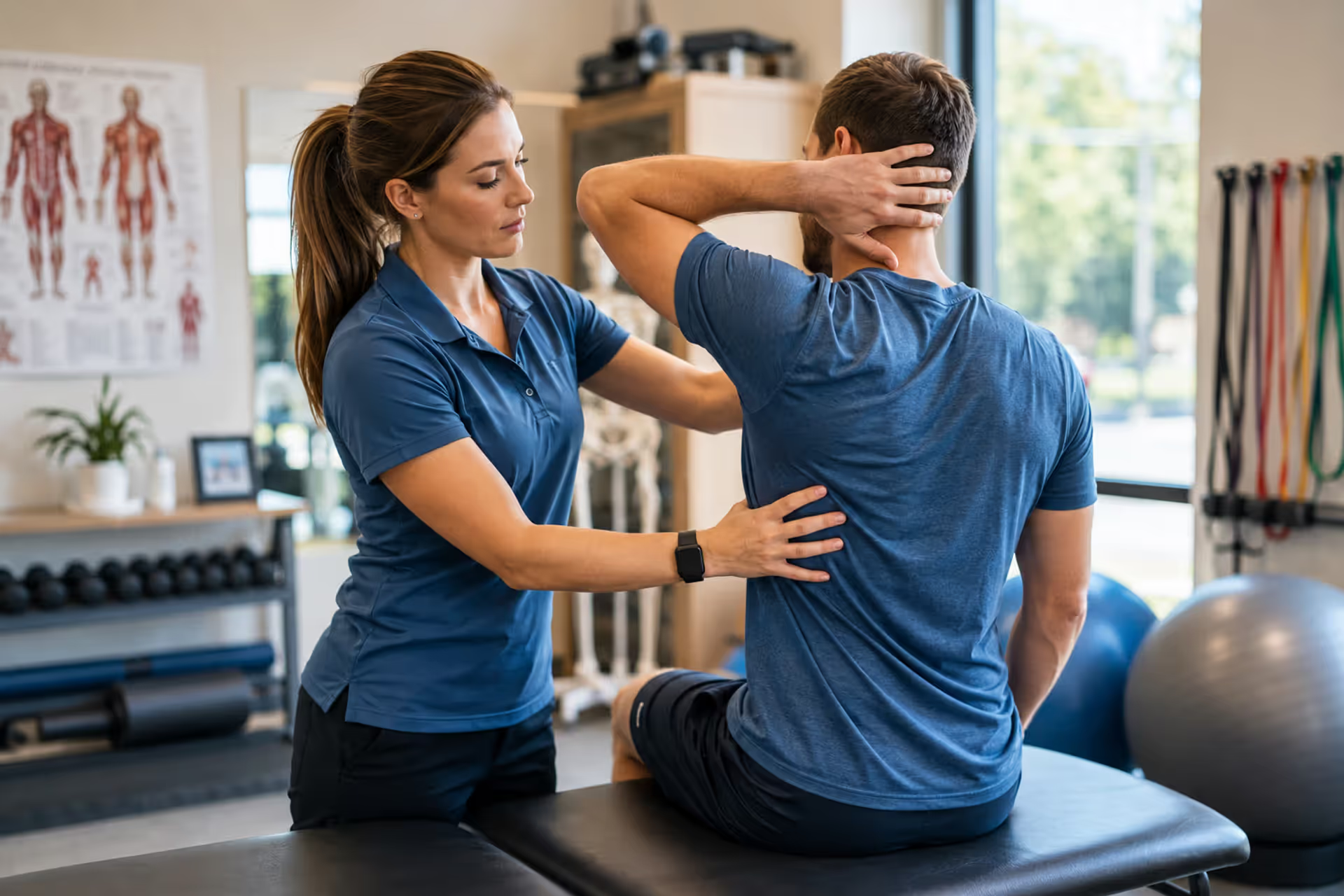
Physical Therapist Guiding a Patient Through Neck and Upper Back Rehabilitation Exercises
How to Become a Physical Therapist?

Thinking about becoming a physical therapist? You're looking at a significant commitment—seven years of education, thousands of dollars in tuition, and rigorous licensing exams. But here's what you actually get: the ability to help someone walk again after a stroke, guide an athlete back to competition, or teach a senior citizen how to stay independent at home. This profession combines hands-on patient care with diagnostic reasoning and therapeutic expertise. Before you dive into applications and prerequisite courses, you need the full picture of what this career path demands and how to navigate it successfully.
What Does a Physical Therapist Do?
Physical therapists diagnose and treat people whose movement is limited by injury, disease, surgery, or aging. Unlike massage therapists or personal trainers, PTs are licensed healthcare providers who evaluate patients, identify the root causes of movement dysfunction, and create targeted treatment programs.
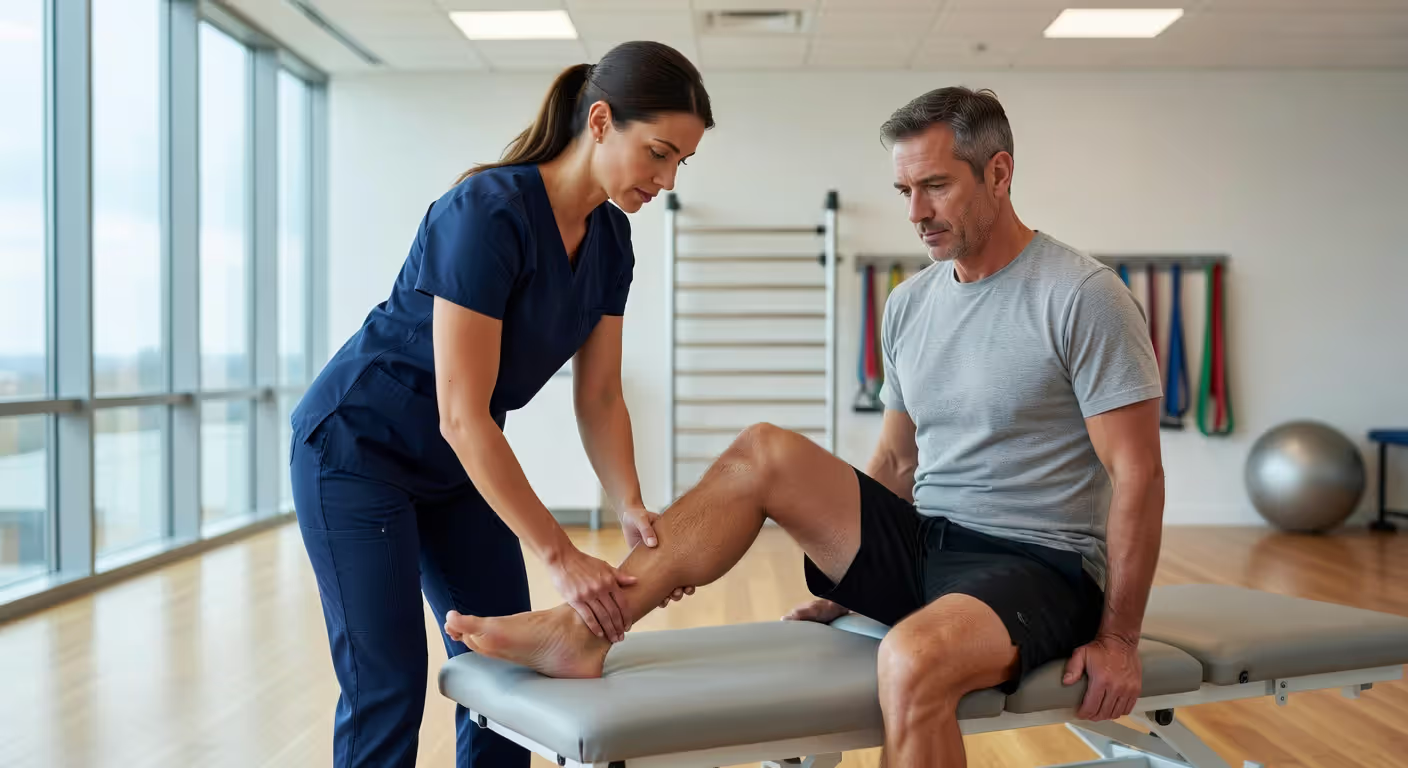
Your typical day involves plenty of patient contact. You might spend an hour with someone recovering from knee replacement surgery—testing their range of motion, guiding them through strengthening exercises, and manually mobilizing stiff joints. The next patient could be a teenager with a sports injury who needs gait analysis and a return-to-play protocol. After lunch, you're documenting treatment notes, updating care plans, and calling a physician to discuss a patient who isn't progressing as expected.
Work settings vary dramatically. Hospital-based PTs treat patients immediately after surgery or serious medical events. Outpatient clinic therapists see people for weeks or months of ongoing rehabilitation. Some PTs travel to patients' homes for in-home therapy. Others work in schools helping children with cerebral palsy or developmental delays. Sports medicine clinics employ therapists who work exclusively with athletes. Nursing homes need PTs to help elderly residents maintain mobility and prevent falls.
Specialization options are extensive. Orthopedic therapists focus on bones, joints, muscles, and ligaments—think sprained ankles, torn rotators cuffs, and post-surgical rehab. Neurological specialists work with stroke survivors, people with multiple sclerosis, or patients with spinal cord injuries. Pediatric PTs treat children from infancy through adolescence. Geriatric specialists understand the unique challenges of aging bodies. Sports physical therapists know how to get athletes back to their sport safely and quickly.
The work is physically demanding. You'll be on your feet most of the day, demonstrating exercises, helping patients move, and manually treating tight muscles or stiff joints. It requires stamina—both physical and mental.
Author: Caleb Thornto;
Source: whitmuircommunityfarm.org
Education Requirements for Physical Therapists
Let me be direct: there's no shortcut here. Every state requires the same basic educational pathway, and you can't practice without completing these specific credentials.
Undergraduate Prerequisites
You'll need a four-year bachelor's degree before applying to any DPT program. Your major doesn't matter—I've seen English majors, business graduates, and psychology students all get accepted to physical therapy school. What does matter? Completing specific science courses with strong grades.
Every DPT program requires these foundational classes:
- Two semesters of anatomy and physiology with labs
- Biology (usually two semesters) with laboratory work
- Chemistry—both general and organic, with labs for each
- Physics (typically two semesters) with hands-on lab components
- Statistics or research methods
- Psychology courses (introductory and developmental)
- Exercise physiology or kinesiology
Some schools want additional courses like medical terminology, nutrition, or biomechanics. Check requirements at your target programs during your sophomore year—discovering you're missing a prerequisite during senior year means delaying your entire application cycle by 12 months.
Your GPA matters more than you might think. Programs often list 3.0 as their minimum, but competitive applicants typically present GPAs around 3.5 or higher. Science course performance carries extra weight. A 3.8 overall GPA with a 3.2 in science courses raises more concerns than a 3.4 across the board.
Here's something many pre-PT students underestimate: observation hours. Programs require documented time shadowing licensed physical therapists—anywhere from 50 to 200 hours depending on the school. These aren't just boxes to check. Admissions committees want evidence that you understand what physical therapists actually do day-to-day, not just what you've seen on TV or imagined. Shadow in multiple settings (outpatient clinic, hospital, home health) to demonstrate broad exposure.
Doctor of Physical Therapy (DPT) Program
The DPT is now the only entry-level degree for physical therapists. You might hear about older "PT" degrees at the bachelor's or master's level—those were phased out in the early 2000s. Everyone entering the profession now needs a doctorate.
Most programs run three full academic years. A handful of accelerated options compress this into 24-30 months, but these are less common and brutally intensive. Expect to attend year-round with minimal breaks.
Coursework starts with deep dives into anatomy—you'll memorize every muscle's origin, insertion, and nerve supply. You'll study biomechanics (how forces affect human movement), pathology (diseases and their effects), pharmacology (medications your patients take), and therapeutic exercise prescription. Later courses cover specialized topics: manual therapy techniques, neurological rehabilitation, pediatric treatment, differential diagnosis, and evidence-based practice.
Clinical education runs parallel to classroom learning. First-year students might complete short observational experiences or one-day-per-week clinic assignments. Second and third years involve full-time clinical rotations lasting 8-12 weeks each. You'll complete at least three or four of these intensive rotations in different settings before graduation. Programs must provide a minimum of 30 weeks of clinical education, though many exceed this requirement.
The workload is substantial. Students regularly underestimate how time-consuming DPT programs are. Plan on studying 40-50 hours per week during didactic semesters, and your clinical rotations require full-time commitment plus evening documentation and study.
Clinical Experience and Residencies
Your DPT program includes mandatory clinical rotations, but some graduates pursue additional training through optional residency programs afterward. These aren't required for licensure or even for specializing, but they're becoming increasingly popular.
Post-graduate residencies last 9-18 months and provide intensive, mentored training in specific areas: orthopedics, neurology, pediatrics, sports, or other specialties. You'll combine supervised clinical work with formal coursework and research projects. Completion often leads to board certification in that specialty area.
Fellowships represent even more focused training—typically following residency completion—in narrow subspecialties within broader fields.
Most PTs don't complete residencies. You can absolutely specialize through continuing education courses and on-the-job experience. But residencies offer structured mentorship and often faster pathways to board certification.
Steps to Becoming a Physical Therapist
The process follows a specific sequence. You can't skip steps or rearrange them, though your timeline might vary based on your starting point.
Step 1: Complete Your Bachelor's Degree
Finish four years of undergraduate education including every prerequisite course DPT programs require. Maintain strong grades, especially in sciences. Simultaneously accumulate observation hours in multiple physical therapy settings—aim for at least 100 hours across different practice areas.
Step 2: Take the GRE (If Your Programs Require It)
Many DPT programs still require Graduate Record Examination scores, though this requirement is becoming less universal. Verify what your target schools expect and prepare accordingly. If needed, plan to take the GRE during junior year or the summer before senior year.
Step 3: Submit Applications to DPT Programs
Most schools use PTCAS (Physical Therapist Centralized Application Service), which lets you apply to multiple programs through one platform. Applications open each July for programs starting the following year. You'll need transcripts, verified observation hours, three recommendation letters, and a personal statement explaining why you want to become a PT.
Apply to 6-10 programs to maximize acceptance chances. Applications cost $100-150 per school, so budget accordingly.
Step 4: Complete Three Years of Doctoral Education
Attend classes full-time, pass all coursework and practical exams, and complete required clinical rotations. Most programs don't allow outside employment during intensive clinical semesters. You'll graduate with a terminal degree and "DPT" after your name.
Step 5: Pass the National Licensure Exam
The NPTE (National Physical Therapy Examination) is required for licensure in every state. Most graduates take it within a month or two after graduation. You'll need a passing score before any state will license you.
Step 6: Apply for State Licensure
Submit licensure applications in whatever state you plan to practice. Requirements include your NPTE passing score, proof of DPT graduation, background checks, and fees. Some states add their own jurisprudence exams covering state-specific regulations.
Processing takes anywhere from two weeks to three months depending on the state.
Step 7: Pursue Specialization If Interested (Optional)
The American Board of Physical Therapy Specialties offers board certification in nine specialty areas. Requirements include documented clinical hours, passing a specialty exam, or completing an accredited residency program. This step is completely optional but can enhance your expertise and marketability in specialized practice areas.

Author: Caleb Thornto;
Source: whitmuircommunityfarm.org
What's the Actual Timeline from Start to Finish?
Most people need seven years minimum from starting undergraduate education to practicing as a licensed PT. Here's how that breaks down—and why it often takes longer.
Standard pathway: four years earning your bachelor's degree plus three years in a DPT program equals seven years of formal education. Add 2-4 months after graduation for taking the NPTE, applying for state licensure, and waiting for approval. You're realistically looking at seven and a half years from your first college class to your first paycheck as a licensed physical therapist.
Many students extend this timeline, though. Taking a gap year between bachelor's and doctoral programs is extremely common. Some students use this year to strengthen their applications, complete additional observation hours, or work as physical therapy aides or technicians. Others need time to improve prerequisite grades or retake courses. These gaps can push your total timeline to eight or nine years.
A few accelerated options exist. Some universities offer direct-entry programs for high school students—these are 6-7 year programs that combine bachelor's and doctoral education into one continuous track. They eliminate the application gap between undergraduate and graduate school and sometimes reduce redundant coursework. The tradeoff? You're committing to physical therapy before ever taking a college class or shadowing in a clinic. These programs are highly competitive and don't leave room to explore other interests.
Here's a realistic comparison of different pathways:
| Pathway Description | Total Time Investment | Credentials Earned | Approximate Total Cost |
| Traditional route (bachelor's degree then DPT program) | 7 years | Bachelor's + DPT | $150,000–$250,000 |
| Direct-entry or combined bachelor's/DPT programs | 6–6.5 years | Bachelor's + DPT | $140,000–$230,000 |
| Gap year(s) between degrees for strengthening application | 8–9 years | Bachelor's + DPT | $150,000–$250,000 |
| Working as PTA first, then pursuing DPT | 8–10 years | Associate's + DPT | $100,000–$200,000 |
Cost estimates include tuition, mandatory fees, books, and living expenses throughout both undergraduate and graduate education. Actual costs vary significantly based on whether you attend public or private institutions and whether you qualify for in-state tuition.
My take? The traditional path works well for most students. If you know by sophomore or junior year that you want to pursue physical therapy, the standard four-plus-three sequence is straightforward and widely available. Accelerated programs save time but require intense commitment and leave little room for changing your mind. Gap years are fine—sometimes they strengthen your application—but they do extend your timeline and postpone your earning potential.
Physical Therapy Assistant vs. Physical Therapist
Physical therapy assistants work alongside physical therapists as essential team members, but their training, responsibilities, and career trajectories differ substantially from PTs.
Education and Training
PTAs complete two-year associate degree programs at community colleges or technical schools. Their coursework covers anatomy, therapeutic exercise, treatment modalities, and includes clinical rotations. But the depth and breadth fall well short of doctoral-level education. PTAs learn to implement treatments, not design them.
Physical therapists earn doctoral degrees—three additional years beyond a bachelor's degree. The education is more comprehensive, covering advanced diagnostic reasoning, differential diagnosis, research methods, and autonomous clinical decision-making.
Scope of Practice
Physical therapists evaluate patients, diagnose movement dysfunctions, create treatment plans, and decide when patients are ready for discharge. In most states, PTs have direct access—patients can see them without physician referrals.
PTAs implement the treatment plans that PTs design. They work directly with patients, teaching exercises, applying modalities like ultrasound or electrical stimulation, and providing hands-on treatment. But they work under PT supervision and direction. PTAs cannot perform initial evaluations, make significant modifications to treatment plans, or independently discharge patients.
Salary and Career Advancement
Physical therapists earn significantly more. Median annual salary for PTs is approximately $97,000, with experienced practitioners in high-demand specialties or geographic areas earning $110,000 or more.
PTAs earn median salaries around $62,000 annually. That's respectable for a two-year degree, but the earning ceiling is considerably lower than for PTs.
Career advancement looks different for each role. PTs can specialize, open private practices, move into management or academic positions, or teach in DPT programs. PTAs face more limited advancement unless they return to school for doctoral degrees.
Can PTAs Transition to PT Roles?
Absolutely—but they must complete DPT programs like everyone else. A few schools offer bridge programs or grant credit for some PTA coursework, but you'll still need to complete the vast majority of doctoral education. Your PTA background gives you advantages in clinical skills and understanding patient care, but it doesn't significantly shorten academic requirements.
Many people start as PTAs to test whether they like the field, earn income while exploring the profession, and gain clinical experience before committing to doctoral education. It's a legitimate pathway, though it substantially extends your overall timeline.

Author: Caleb Thornto;
Source: whitmuircommunityfarm.org
Licensing and Certification Requirements
You cannot practice physical therapy without state licensure. Period. Every state requires it, and while the process shares similarities nationwide, each state controls its own requirements.
National Licensure Examination Details
The Federation of State Boards of Physical Therapy (FSBPT) creates and manages the licensing exam—officially called the National Physical Therapy Examination or NPTE. This computerized test contains 250 multiple-choice questions administered at testing centers nationwide.
Content covers four main areas: treating musculoskeletal conditions, managing neuromuscular and neurological problems, addressing cardiovascular/pulmonary and other systemic issues, plus equipment and assistive devices. The exam also tests non-clinical knowledge like safety protocols, professional ethics, and research interpretation.
You get five hours to complete all 250 questions. Scoring uses a scaled system from 200-800 points, with passing typically requiring around 600 points (though the exact passing score fluctuates slightly between exam versions).
Most graduates take the NPTE within weeks of finishing their DPT programs. First-time pass rates are strong—approximately 90% for graduates of accredited programs. If you don't pass, you can retake it, though states limit how many attempts you get and require waiting periods between tries.
State Licensure Application
After passing the NPTE, you apply for licensure in whichever state you plan to practice. Standard requirements include:
- Proof of graduation from an accredited DPT program
- Passing NPTE score report
- Criminal background check and fingerprinting
- State-specific jurisprudence exam (in some states)
- Application fees ranging from $100-400
Some states add extra requirements—ethics courses, additional exams on state laws, or documented continuing education hours.
Processing speed varies dramatically. Some states issue licenses within three weeks; others take two to three months. Plan ahead if you have a job offer waiting.

Author: Caleb Thornto;
Source: whitmuircommunityfarm.org
Practicing Across State Lines
Physical therapy licenses don't automatically transfer between states. If you move, you'll need to apply for licensure in your new state. Many states have reciprocity agreements that streamline the process for PTs already licensed elsewhere, but you'll still submit applications, pay fees, and possibly take state-specific exams.
The Physical Therapy Compact offers a better solution. As of 2026, more than 30 states participate in this agreement, which allows PTs licensed in one compact state to practice in other compact states without obtaining separate licenses. This dramatically simplifies interstate practice and telehealth service delivery.
Continuing Education
Every state mandates ongoing education for license renewal. Requirements vary—some states require 20 hours every two years, others mandate 30 or more. Approved courses cover clinical topics, ethics, regulatory changes, and current research.
Board certification in specialties requires additional continuing education and recertification every ten years.
Clinical education is where students truly learn to think like physical therapists. You can master anatomy and therapeutic techniques in the classroom, but clinical reasoning—knowing what to assess, when to modify treatment, how to communicate with patients—that only develops through supervised practice with real patients facing complex, unpredictable problems.
— Thompson Sarah
FAQ: Physical Therapy Career Questions Answered
Becoming a physical therapist requires serious commitment—seven years of education, substantial financial investment, and rigorous licensing requirements. But for people passionate about helping others improve their movement, manage pain, and regain independence, this profession offers clinical variety, excellent job security, and the deep satisfaction of witnessing patients progress under your care. Start by researching DPT programs, accumulating observation hours in multiple settings, and ensuring your undergraduate coursework aligns with admissions requirements—these initial steps lay the groundwork for your entire professional journey.
Related Stories
Read more
Read more


The content on this website is provided for general informational and educational purposes only. It is intended to explain concepts related to professional training, certifications, vocational education, online courses, and continuing education.
All information on this website, including articles, guides, and examples, is presented for general educational purposes. Outcomes may vary depending on individual choices, program selection, and personal effort.
This website does not provide professional career counseling or guarantee educational outcomes, and the information presented should not be used as a substitute for consultation with qualified educators, trainers, or career advisors.
The website and its authors are not responsible for any errors or omissions, or for any outcomes resulting from decisions made based on the information provided on this website.