
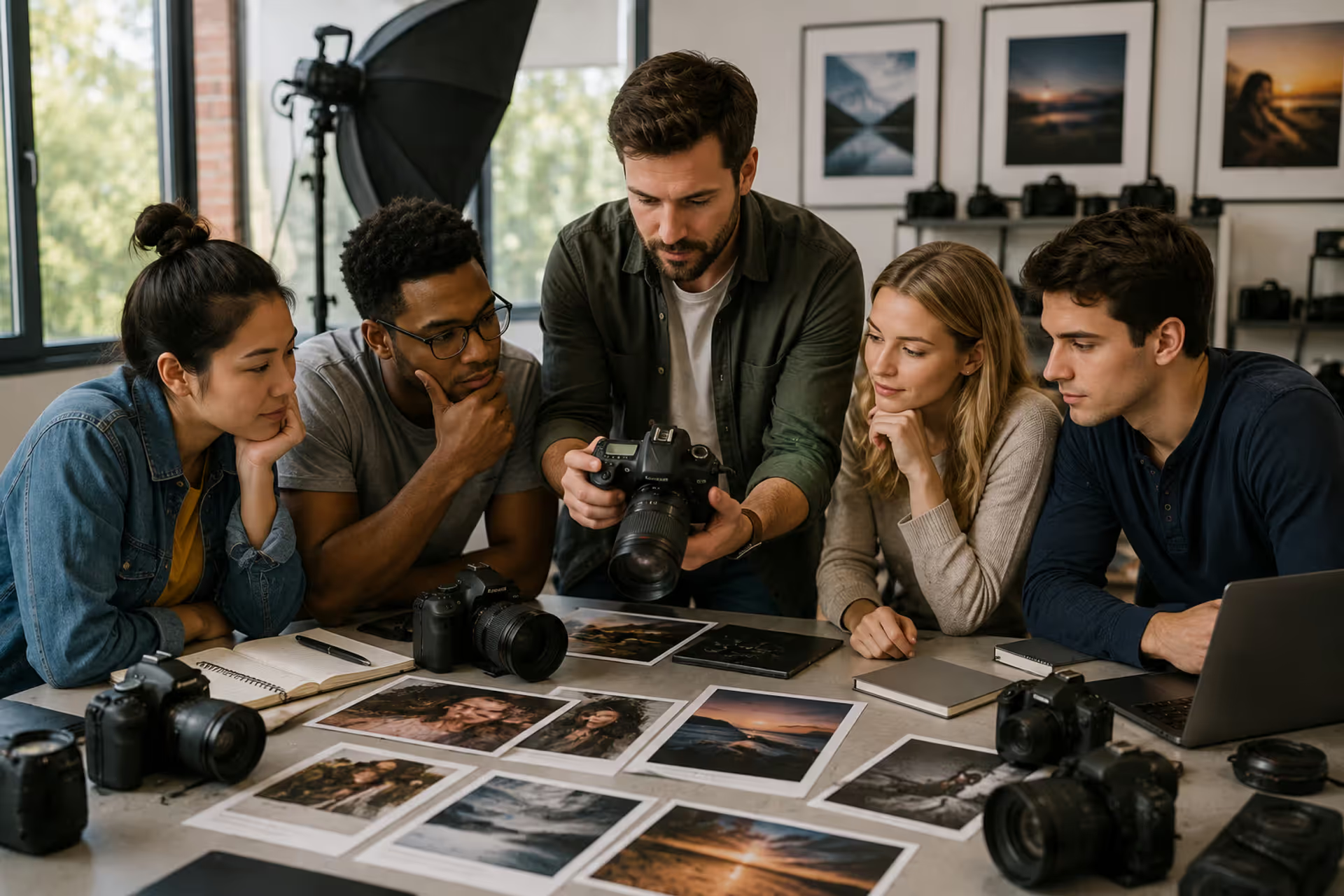
Choosing Photography Classes That Match Your Goals
How to Choose Photography Classes?

Content
Content
You're looking at photography classes online. Tabs multiply across your browser—some programs want six months of your life, others want four years. Price tags range from zero (hello, YouTube) to $120,000 for a bachelor's degree. One site promises you'll be "career-ready" in three months. Another warns you'll need a master's degree to get hired anywhere.
Which one's actually right?
Neither, probably. The program that works for your neighbor might waste your time completely. A 22-year-old college graduate moving to New York needs different training than a 40-year-old accountant who wants to shoot weddings on weekends. Someone who learns best by doing needs a different format than someone who prefers studying theory first.
I'm going to walk through what's actually available, what each option costs, what you'll learn, and how to figure out which path makes sense for your specific situation.
Types of Photography Programs and Learning Formats
Photography training splits into several categories. They're not interchangeable—each works for different circumstances.
Traditional photography school means showing up to a physical location on a schedule. You'll work in studios with professional lighting setups, access darkrooms (some programs still teach film), and get immediate feedback when you're setting up a shot. Most photography schools offer either certificate tracks or full degree programs. The schedule's fixed—Tuesdays and Thursdays, 6-9pm, something like that.
The upside? An instructor watches you work and corrects mistakes in real time. "Your key light's too high, bring it down eight inches" hits differently when someone's standing next to you versus reading it in a comment three days later.
The obvious downside: you have to be there. Specific days, specific times. Miss a class and you're scrambling to catch up.
Online photography certificate programs have gotten dramatically better in the past five years. Early versions were basically recorded lectures with maybe a forum. Current programs include structured assignments, video critiques of your work, and sometimes live sessions where instructors review student photos in real time.
Quality varies more wildly here than in-person options. Some online programs match or beat traditional schools. Others slap "certificate program" on what's really just a video course with a PDF at the end.
Photography certificate programs—whether online or in-person—typically run three to twelve months. They concentrate on practical skills you need to start working: camera operation, lighting techniques, editing workflows, building a portfolio. Most accept anyone who owns a camera and can commit to the schedule. They're designed for career changers, serious hobbyists, or people in adjacent creative fields (graphic designers, marketers) who need photography skills.
Degree programs take two years (associate) or four years (bachelor's). You'll study photography alongside general education—English composition, math, science, art history. These programs prepare you for positions that require formal credentials: teaching at community colleges, museum work, corporate creative director roles. The photography curriculum itself might not differ much from a certificate program, but you're getting that broader education and the degree credential.
Workshops and intensive courses compress learning into weekends or week-long sessions. They're laser-focused—"Portrait Lighting Fundamentals" or "Wedding Photography Business Bootcamp." Great for targeted skill-building if you already have a foundation. Terrible as your only training.
Self-paced online courses give you lifetime access to video lessons. No deadlines, no instructor feedback (usually), no cohort of other students. You work through material whenever you want. This costs less and offers maximum flexibility. It also requires serious self-discipline and works best if you already understand basic photography concepts.
I've noticed a pattern: people start with self-paced courses, realize they're stuck without feedback or accountability, then enroll in a structured certificate program.
What You'll Learn in Photography School
Most serious programs cover the same core areas, regardless of whether they're online or in-person.
Technical fundamentals come first. Aperture, shutter speed, ISO—the exposure triangle. Focus modes, metering systems, white balance, how different focal lengths change perspective. This part isn't exciting. It's also not optional. You can't make creative decisions if you're guessing about technical settings every time you press the shutter.
Composition and visual theory explain why certain images work. Rule of thirds, sure, but also leading lines, negative space, color relationships, visual hierarchy. You'll study famous photographs—Dorothea Lange's "Migrant Mother," Steve McCurry's "Afghan Girl"—and analyze what makes them powerful beyond just "good composition."
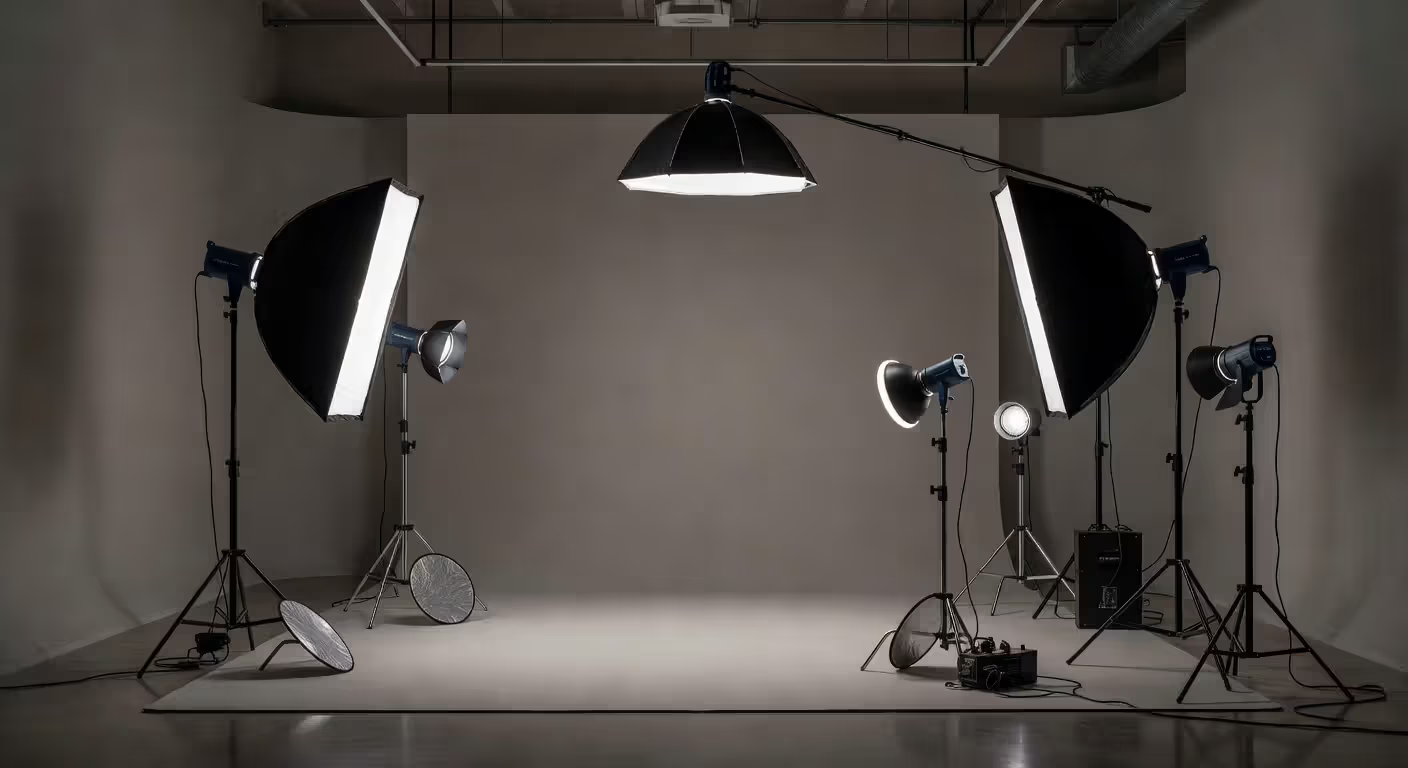
Lighting gets extensive coverage in any program worth the money. Natural light characteristics throughout the day. Continuous artificial lights versus flash/strobe. Light modifiers—softboxes, umbrellas, reflectors, grids. Multi-light setups for commercial work. Commercial photography basically is lighting. Everything else is secondary.
Author: Ethan Whitlock;
Source: whitmuircommunityfarm.org
Post-processing and editing means learning software—Adobe Lightroom and Photoshop, primarily. RAW file processing, color correction, skin retouching, compositing multiple images, optimizing exports for different uses (Instagram needs different specs than a 40x60 print).
Many programs now integrate digital media production concepts. Photography doesn't exist in isolation anymore. You might learn basic video editing, how to create motion graphics, or how to combine still images with video clips for multimedia projects.
Some schools—particularly those with broader creative programs—let photography students take coursework in film and video production or digital art and design. The technical skills overlap significantly. Many photographers now shoot video for the same clients, and understanding motion and editing helps even with still photography.
Specialization usually happens midway through a program. You pick a focus area: portraiture, commercial product work, photojournalism, fine art, architectural photography, event coverage. Each has distinct technical requirements and business models.
Business and professional practices separate programs that prepare you for actual work from programs that just teach camera operation. Client communication. Pricing strategies. Contracts and licensing. Copyright law. Marketing. Portfolio presentation. You can be technically brilliant and still fail as a professional photographer if you can't find clients or negotiate fair payment.
Here's something rarely taught but desperately needed: handling creative criticism. You'll submit work you're proud of. Someone will point out everything wrong with it. That stings. Learning to extract useful feedback from criticism while not taking it personally is a skill itself.
Photography Education Requirements and Prerequisites
Entry requirements change dramatically depending on what you're applying to.
Certificate programs typically require almost nothing. Be 18 years old. Own a DSLR or mirrorless camera. Have basic computer skills. Done. No portfolio, no previous art classes, no specific educational background.
Some programs want you to have a camera with manual controls, but many will tell you exactly what to buy after you enroll.
Associate degree programs at community colleges have similarly low barriers. High school diploma or GED. Completed application. Maybe a personal statement explaining why you want to study photography. Competitive programs might ask for a portfolio—10 to 15 images—but they're evaluating potential and visual curiosity, not technical mastery.
Bachelor's degree programs at universities or art schools get selective. You'll submit a portfolio (15-20 images), write an artist statement explaining your work, provide transcripts, get letters of recommendation, possibly complete an interview. They're looking for visual sensibility and commitment, not perfection.
The portfolio requirement intimidates people unnecessarily. Admissions committees know you're applying to learn. They want to see you notice interesting things, understand basic composition, and experiment. They're not expecting professional-level work.
Equipment requirements depend on the program. Most require a DSLR or mirrorless camera with interchangeable lenses and full manual controls. Entry-level models work fine—you don't need a $4,000 camera body. Budget $800-1,500 for a camera and starter lenses.
You'll also need a computer capable of running Lightroom and Photoshop (8GB RAM minimum, 16GB recommended) and an external hard drive for image storage.
Some programs provide equipment for in-class use but expect you to own your camera for assignments outside scheduled class time.
Time commitment matters more than most people expect. A certificate program listed as "6 months" assumes 15-20 hours weekly between class time and assignments. Working full-time? That same program realistically takes 12-18 months.
Online programs give you flexibility with when you work, but you need discipline. No fixed class times means it's tempting to keep pushing work to "next week."
Full-time degree programs assume 40+ hours weekly when you include classes, lab time, assignments, and projects.
Cost Comparison: Photography Certificates vs. Degree Programs
Photography education costs anywhere from a few hundred dollars to six figures. Here's what you're actually paying for at each level.
| Program Type | Typical Duration | Average Cost Range | Prerequisites | Career Level Prepared For | Online Availability |
| Certificate (in-person) | 3-12 months | $3,000-$15,000 | High school diploma, camera | Entry-level professional, freelance | Limited |
| Certificate (online) | 3-12 months | $500-$8,000 | High school diploma, camera | Entry-level professional, freelance | Extensive |
| Associate Degree | 2 years | $6,000-$30,000 | High school diploma, basic portfolio | Entry to mid-level professional | Moderate |
| Bachelor's Degree | 4 years | $40,000-$120,000 | High school diploma, portfolio, transcripts | Mid-level professional, teaching, corporate | Limited |
| Workshops/Short Courses | 2 days - 6 weeks | $200-$3,000 | Usually none | Skill-specific improvement | Moderate |
The cost differences reflect more than just program length.
University bachelor's degrees bundle general education (English, math, sciences, humanities) with photography coursework. You're paying for broad education and a recognized credential. This matters for teaching at the college level, museum curator positions, or corporate creative roles that require a four-year degree on paper.
For working photographers? The degree itself rarely matters. Clients hire based on your portfolio, not your diploma.
Associate degrees offer middle ground. You get structured education, equipment access, and a credential—at maybe a third of bachelor's degree cost. Community college programs often have excellent instructors (many are working professionals teaching part-time) and strong connections to local industry.
The best photography program isn't always the most expensive one—it's the one that aligns with how you learn and what you want to shoot. I've seen $50,000 art school graduates struggle to find work while certificate program students with strong portfolios book clients immediately.
— Martinez Elena
Certificate programs focus exclusively on photography skills. No unrelated coursework, no general education requirements. You learn what you need to start working, then you're finished. The shorter timeline means lower total cost, even if the monthly price is similar to a degree program.
Online certificate programs cut costs further by eliminating physical facilities. No studio rent, no equipment maintenance, reduced instructor overhead. These savings get passed to students. A $12,000 in-person certificate might cost $4,000 online with comparable curriculum quality.
The trade-off? Less hands-on equipment access and no in-person networking. You need to create your own practice opportunities and build connections differently.
Hidden costs add up too. Photography programs rarely include equipment purchases, software subscriptions (Adobe Creative Cloud runs $55/month), printing costs for portfolio development, or travel to shooting locations. Budget an extra $2,000-5,000 for these expenses over a typical program.
Online Photography Certificate Programs Worth Considering
Online photography education has matured significantly in the past five years. Early programs were mostly recorded lectures with minimal interaction. Quality programs now offer structured learning that rivals in-person training in several ways.
The benefits are obvious enough. Learn on your schedule, from anywhere. Rewatch difficult lessons. Skip the commute. Programs cost less because they don't maintain physical studios and equipment.
You also get exposure to instructors you couldn't access locally. A photographer in rural Montana can learn from a New York commercial shooter or a National Geographic photojournalist.
The challenges are equally real. You need self-discipline. Nobody's checking whether you showed up. You'll miss spontaneous learning moments that happen when you're physically working alongside other students. Equipment access is limited to what you own or can rent locally.
Strong online photography certificate programs include these elements:
Structured curriculum with clear progression. Not just a library of random videos, but a deliberate path from fundamentals through advanced techniques.
Assignment feedback from qualified instructors. You submit work, someone with real experience reviews it and provides specific guidance. This separates legitimate programs from glorified video libraries.
Live or recorded critiques. Watching an instructor analyze student work teaches you to see photographically. You learn from others' mistakes and successes.
Community interaction. Forums, group critiques, or cohort-based learning where you connect with other students. Photography improves faster with peer feedback and accountability.
Portfolio development support. Guidance on selecting and presenting your best work, not just creating it.
When evaluating online programs, check instructor credentials carefully. Are they working professionals or just teachers? Both have value, but working professionals bring current industry knowledge.
Look at student work examples. Programs should showcase graduate portfolios. If they're not displaying student work prominently, question why.
Accreditation matters less for certificate programs than degree programs, but it's worth checking. Accredited schools meet baseline quality standards and allow you to use federal financial aid if needed.
Some online photography programs connect to broader creative education in digital art and design or even audio recording schools. These interdisciplinary options make sense if you're building a multimedia skillset. Many photographers now need basic motion graphics, video editing, or sound design knowledge for commercial projects.

Author: Ethan Whitlock;
Source: whitmuircommunityfarm.org
The simpler option usually wins. A focused photography program beats a scattered "creative everything" program unless you specifically need those additional skills.
Career Paths After Photography Training
Photography training opens multiple career directions. Some require formal education credentials. Most care more about your portfolio.
Freelance photography is where most people end up. You build a client base, shoot projects, handle your own business operations. Specializations include weddings, portraits, events, real estate, product photography, food photography, and corporate headshots.
Income varies dramatically. Wedding photographers might earn $2,000-10,000 per wedding, shooting 20-40 weddings annually. Portrait photographers might charge $300-2,000 per session. Product photographers working with e-commerce brands might have retainer agreements worth $3,000-8,000 monthly.
The first year is typically slow. You're building a portfolio, establishing reputation, learning business operations. Most successful freelancers take 2-3 years to reach sustainable full-time income.
Staff photographer positions exist at newspapers, magazines, marketing agencies, corporations, and universities. These provide steady income and benefits but limit creative control. You shoot what you're assigned.
Salaries range from $35,000-75,000 depending on market size and employer type. Major metro newspapers pay more than small-town papers. Corporate positions typically pay better than editorial work.
Commercial photography means shooting for businesses—advertising campaigns, product catalogs, corporate communications. This work pays well ($500-5,000+ per day) but requires strong technical skills, reliability, and business professionalism.
You'll often work with art directors, follow creative briefs, and deliver specific shots rather than pursuing your artistic vision.
Fine art photography involves creating work for gallery exhibition and sale. This is extremely competitive and rarely provides full-time income. Most fine art photographers teach, do commercial work, or have other income sources while building their art practice.
Teaching requires at least a bachelor's degree (for high school or community workshops) or a master's degree (for college-level positions). Teaching provides stable income and benefits while allowing you to maintain a photography practice.
Photojournalism has contracted significantly as newspapers shrink. Positions are competitive and often require a journalism degree alongside photography skills. Pay is modest ($30,000-60,000) but the work is meaningful.
Many photographers now cross into film and video production or digital media production. The equipment and technical skills overlap substantially. Adding video services increases your value to clients and opens new revenue streams.
A common mistake is specializing too early. You might think you want to shoot weddings, then discover you prefer product work. Give yourself time to explore different photography areas before committing to a niche.
Another pattern: successful photographers often combine multiple income streams. They might do commercial shoots for steady income, teach workshops for additional revenue, and pursue personal projects for creative fulfillment.
Portfolio quality matters more than anything else for photography careers. A strong portfolio from a certificate program beats a weak portfolio from an expensive university program. Every time.
How to Evaluate Photography Schools Before Enrolling
Not all photography programs deliver what they promise. Some warning signs and positive indicators help you evaluate options.
Accreditation matters primarily for degree programs and federal financial aid eligibility. Certificate programs don't always need accreditation, but legitimate ones usually have it. Check if the school is accredited by recognized agencies (regional accreditation for universities, or specialized accreditation like NASAD for art schools).
Instructor credentials tell you a lot. Look up the faculty. Are they working photographers with recent professional experience? Have they exhibited work, published, or won industry recognition? Or are they primarily academics who haven't shot professionally in years?
Both types of instructors have value, but working professionals bring current industry knowledge and connections.
Author: Ethan Whitlock;
Source: whitmuircommunityfarm.org
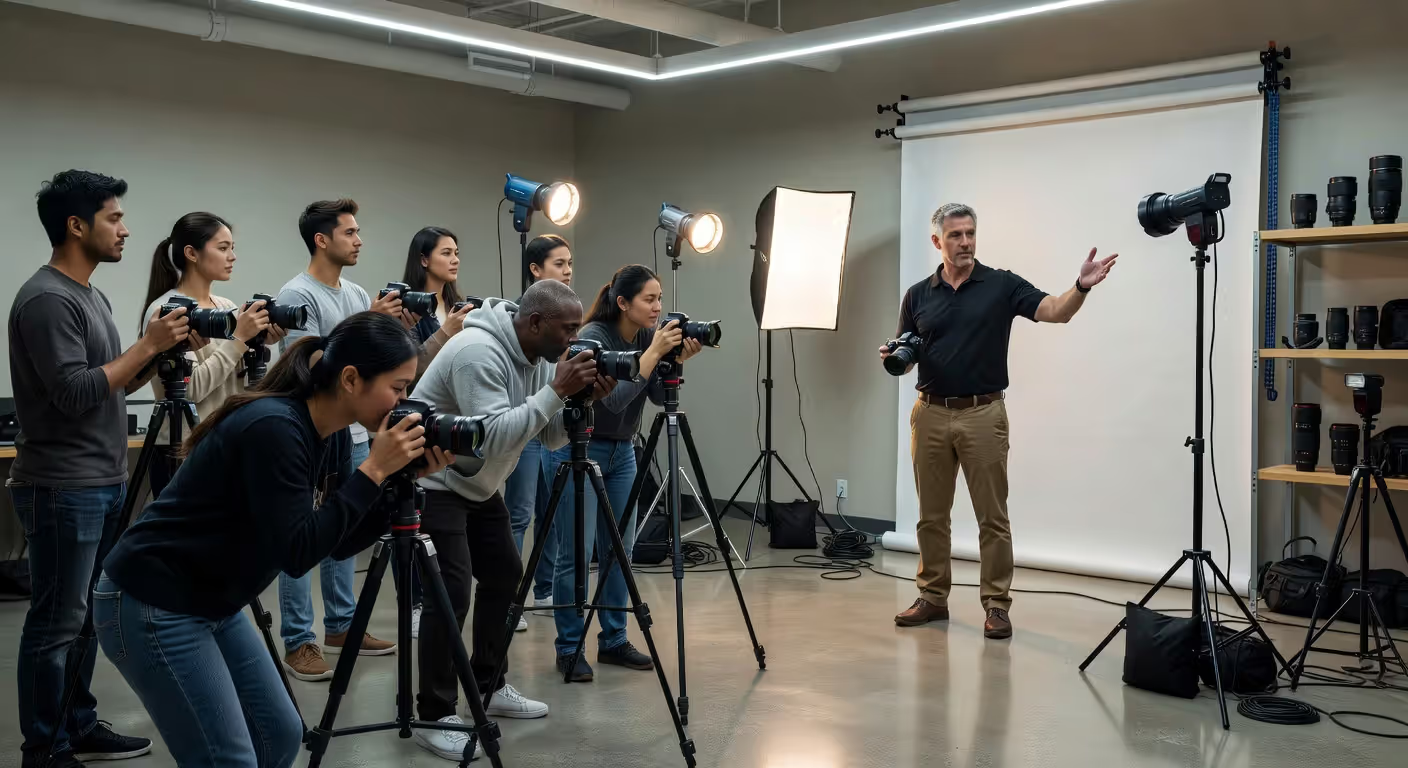
Equipment access separates serious programs from weak ones. You should have access to professional cameras, various lenses, lighting equipment, backdrops, and editing workstations. Ask specifically what equipment is available, when you can use it, and whether there are additional fees.
Programs that expect you to provide all your own equipment beyond a basic camera raise questions. Part of what you're paying for is access to gear you couldn't afford individually.
Student work examples show what you can realistically achieve. Programs should showcase current student portfolios and graduate work. Programs that only show instructor work or don't have student examples readily available deserve skepticism.
Look at the range of work too. Do all student portfolios look similar (suggesting limited creative development) or diverse (suggesting students found their own voice)?
Job placement rates and graduate outcomes matter if you're pursuing photography as a career. What percentage of graduates work in photography-related fields within a year of completing the program? Where do they work?
Be wary of vague claims like "most graduates find work in creative fields." That could mean anything. Specific examples and statistics are more trustworthy.
Class sizes affect the learning experience. Smaller classes (under 15 students) mean more individual attention and feedback. Large lecture-style classes work for theory but not for skill development.
Curriculum transparency is a positive sign. Programs should clearly list what you'll learn, week by week or module by module. Vague descriptions like "advanced photography techniques" without specifics suggest a disorganized program.
Trial options reduce risk. Some programs offer a single course or introductory module you can take before committing to the full certificate or degree. This lets you evaluate teaching quality and fit.
Alumni networks and industry connections help with job placement and ongoing career development. Does the school have relationships with local studios, agencies, or publications? Do they host portfolio reviews with industry professionals?
One thing to watch: programs that promise specific income outcomes ("graduates earn $75,000 average salary"). Photography income varies too much for meaningful averages. This kind of claim suggests marketing over substance.
Trust your gut during campus visits or online program demos. Pay attention to whether they're trying to help you succeed or just close a sale.
FAQ: Photography Education Questions Answered
The right photography education path depends entirely on where you are and where you want to go. Someone switching careers at 35 needs a different approach than an 18-year-old high school graduate. A hobbyist wanting better family photos doesn't need what a commercial photographer requires.
Start by clarifying your actual goal. Then match that goal to the most efficient path. Don't overpay for credentials you don't need. But don't shortchange yourself on feedback and structure if you're serious about professional work. Photography skills are learnable. The question is finding the learning method that fits your situation and actually following through.
Related Stories

Read more

Read more


The content on this website is provided for general informational and educational purposes only. It is intended to explain concepts related to professional training, certifications, vocational education, online courses, and continuing education.
All information on this website, including articles, guides, and examples, is presented for general educational purposes. Outcomes may vary depending on individual choices, program selection, and personal effort.
This website does not provide professional career counseling or guarantee educational outcomes, and the information presented should not be used as a substitute for consultation with qualified educators, trainers, or career advisors.
The website and its authors are not responsible for any errors or omissions, or for any outcomes resulting from decisions made based on the information provided on this website.